News & Updates
Product launches, research milestones, partnership announcements, and ecosystem updates from MsingiAI.
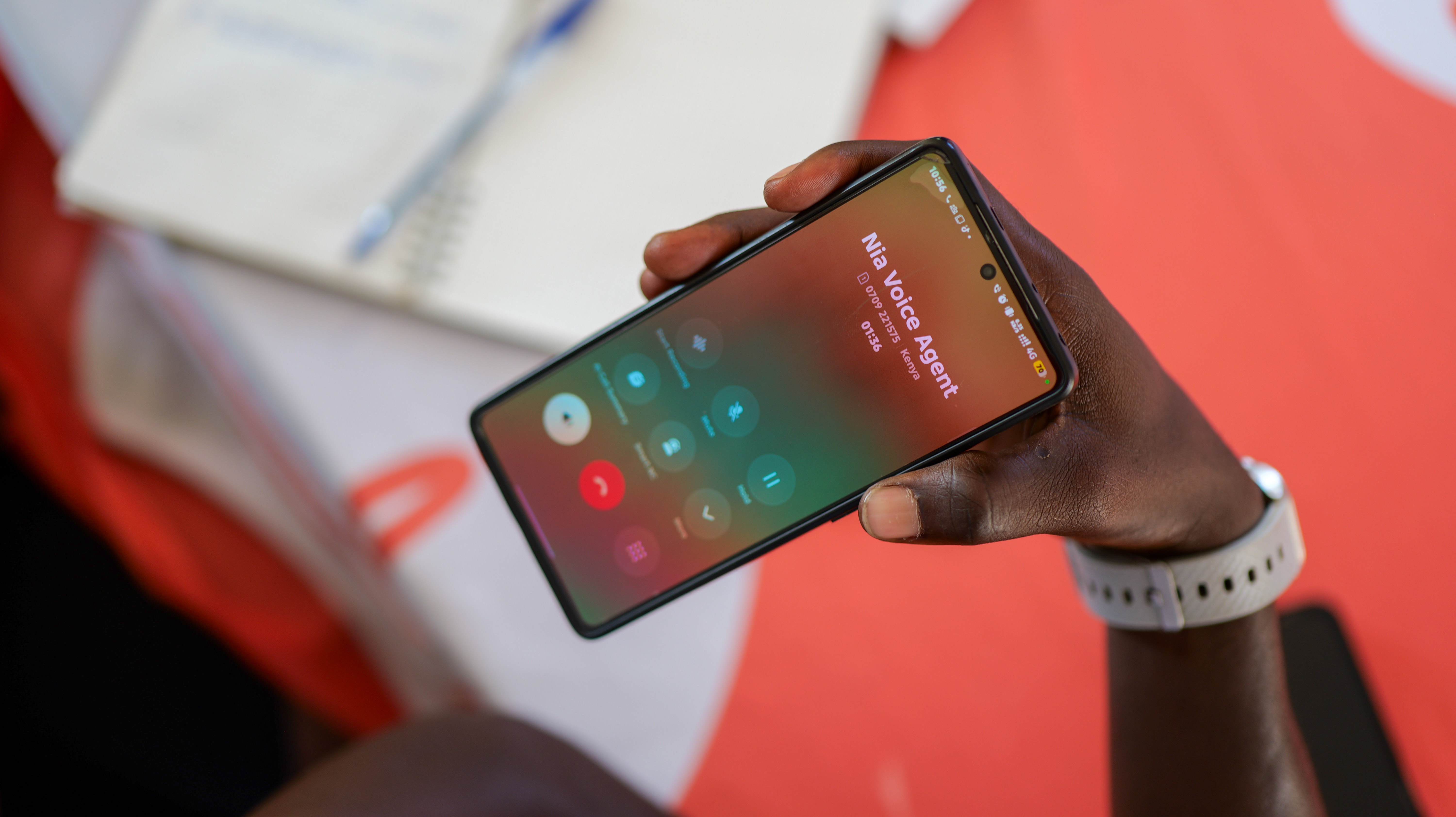
Swahili Voice AI, an Ordinary Phone Call Away
A week with farmers in Busia and Ahero showed what accessible voice AI can look like: a normal phone call, airtime, and a conversation in familiar language. Here is what the experience is teaching us about speech technology, reliability, and equal access

Building Swahili Speech on Dia-1.6B
We open-source a Swahili text-to-speech model built on Dia-1.6B, trained on 126 hours of openly licensed speech data. Along the way, we found that several of our assumptions about model adaptation, evaluation, and benchmarking were wrong. This post describes the engineering decisions behind the model, the limitations we encountered, and the lessons we learned about adapting English-centric TTS models to low-resource languages. It also introduces our streaming inference implementation and explains why we're releasing not just the model, but the training pipeline, evaluation framework, and negative results that shaped it.
MsingiAI Partners with the Africa Compute Fund to Support African AI Infrastructure and Deployment
MsingiAI has partnered with the Africa Compute Fund to explore collaboration on AI infrastructure, deployment, distribution, and commercialization, helping accelerate the adoption of African-built AI. Together, we're working toward an ecosystem where African AI goes beyond research to power real products, institutions, and communities across the continent.
MsingiAI Joins the NVIDIA Inception Program
MsingiAI Joins NVIDIA Inception Program
Sauti ASR: Building Speech Recognition for Real Swahili Conversations
Model relSauti ASR is MsingiAI’s Swahili automatic speech recognition system built for real-world African speech, not just clean benchmark datasets. In this release, we introduce two public tracks: Track A, our production-facing Swahili ASR baseline built on `microsoft/paza-whisper-large-v3-turbo`, and Track B, an Omnilingual conversational ASR research preview exploring harder long-form and code-switched speech. The blog covers our benchmark results, long-audio testing on real conversational and clinical recordings, deployment infrastructure using Modal, direct Hugging Face publishing workflows, and the lessons we learned about conversational robustness, training stability, and long-context inference. More importantly, it explains why building useful African speech systems requires optimizing for real conversations, noisy audio, code-switching, and deployment reliability not just leaderboard metrics.

AkiliCode-14B Research Preview: Reinforcement Learning Experiments at MsingiAI
MsingiAI is releasing the first research preview of AkiliCode-14B, a compact coding-reasoning model developed through a series of reinforcement learning and robustness experiments. Rather than focusing only on first-pass benchmark performance, the project explored how targeted failure replay and repair-oriented training can improve robustness in compact code models. The resulting Stage 3 checkpoint achieved strong improvements on HumanEval+ and MBPP+ while maintaining stable engineering capability on BigCodeBench and significantly improving official LiveCodeBench evaluation reliability.
Introducing Sauti STT v1: Speech Recognition for Swahili
We’ve introduced Sauti STT, a speech-to-text system designed specifically for Swahili and the way it’s spoken in East Africa. Many existing ASR models fail on Kenyan accents and natural code-switching, so Sauti focuses on fixing that with reliable transcription, real-time performance, and broad accent coverage. This release is part of a larger effort to build core AI infrastructure for African languages not just STT, but the full speech and language stack. More details, demos, and integration options will be shared soon.
Bringing Swahili to Life: Introducing Sauti TTS v1
Sauti TTS v1 is a state-of-the-art Swahili text-to-speech system developed by MsingiAI to provide a high-fidelity digital "voice" for the 200 million Swahili speakers across East Africa. Built upon the F5-TTS flow-matching architecture and trained on the professional WaxalNLP dataset, the system moves away from robotic, mechanical sounds to produce natural speech with correct native prosody and rhythm.
AkiliX Constitution: Building AI with East African Values
We're developing something we believe is essential for responsible AI in our region a constitution that guides how AkiliX thinks, speaks, and serves East African communities. Here's what we're working on and why it matters.